Sometimes Business Needs a Pause
Whether due to a temporary drop in revenue, personal circumstances, or the need for restructuring, a temporary suspension of a sole proprietorship can be an effective solution. This blog will explain in detail how to legally and efficiently pause your business activity using a power of attorney—without unnecessary trips to the Business Registers Agency (APR).
What Is Temporary Suspension of a Sole Proprietorship and When to Use It?
Temporary suspension allows sole proprietors to officially pause their business activities without permanently closing their company. This step is often chosen by entrepreneurs facing challenges such as low revenue, seasonal fluctuations, or personal needs like health or family-related matters.
Steps for Successfully Suspending Business Activity
The request for temporary suspension is submitted to the APR. Sole proprietors can authorize a lawyer, who—using a power of attorney—can handle the entire process digitally and online. This allows entrepreneurs to complete the procedure without physically visiting the APR.
Flat-Rate Taxation and Tax Obligations
For sole proprietors who are taxed on a flat-rate basis, there is no need to submit additional tax declarations during the suspension period. The Tax Administration automatically receives notice from the APR about the suspension, allowing entrepreneurs to focus on their plans without extra administrative burdens.
Legal Consequences of Temporary Suspension
It’s important to note that the APR does not require proof of settled tax obligations before entering the suspension status. This significantly simplifies the process for entrepreneurs.
Maximum Duration of Suspension
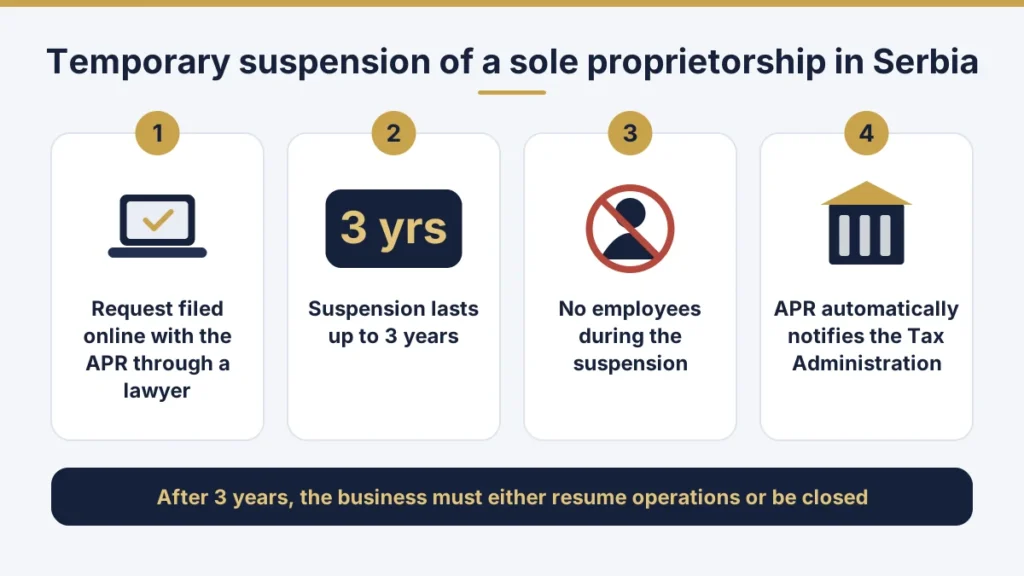
A sole proprietorship can remain in suspension for up to three years. After this period, the entrepreneur must choose whether to resume business operations or permanently close the business.
Employee Status During Suspension
While the business is suspended, entrepreneurs cannot have any employees. If there are employees at the time of entering suspension, their employment contracts must either be terminated or they must be reassigned to other roles or companies.
Conclusion: Suspension as a Recovery Strategy
Temporarily suspending your sole proprietorship not only helps save resources during inactive periods but also provides an opportunity to restructure and plan for the future. With proper legal support, this can be a smooth transition that allows entrepreneurs to return stronger and better prepared for new business challenges.
For more information and legal support, Dvornić Law Office is at your service.
Note: This blog is for informational purposes only and does not constitute legal advice. For specific legal questions and support, please contact Dvornić Law Office.