In today’s digital era, where more and more business processes are moving online, the qualified electronic signature has become an essential tool. From e-banking to interactions with state institutions, an e-signature provides a fast, secure, and legally valid way to authorize documents. This guide explains how it works, why it matters, and how to use it in everyday business.
What Is an Electronic Signature?
An electronic signature (e-signature) is a set of electronic data that confirms both the content of a document and the identity of the signer. A qualified electronic signature is a specific type of advanced e-signature that carries the same legal weight as a handwritten signature. It is based on asymmetric cryptography and involves a qualified certificate that contains data about the certificate holder, their public key, the issuing authority, and its validity period.
Why Is a Qualified Electronic Signature Important?
With a qualified e-signature, you can access and use key digital services across Serbia:
- Sign legal documents and contracts securely, whether you’re a lawyer or business owner.
- Register a company online—no notary visit required.
- Submit tax filings through the eTaxes portal.
- Use public digital platforms, including the Republic Geodetic Authority’s eCounter, the Agency for Electronic Communications, and the Central Civil Registry.
How to Obtain a Qualified Electronic Certificate
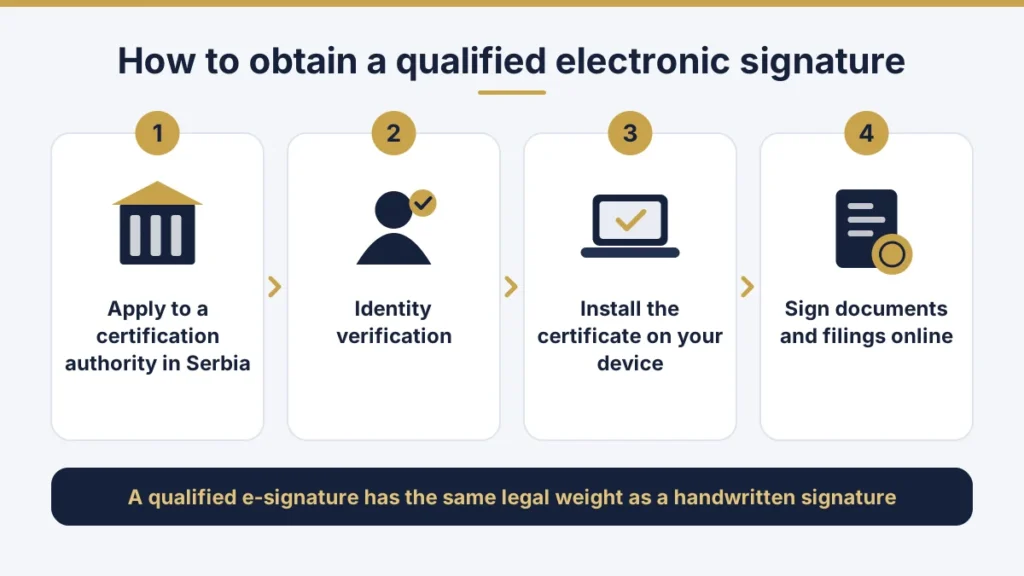
To use an e-signature, you’ll need to acquire a qualified electronic certificate from an authorized provider. The process includes:
- Submitting an application to one of Serbia’s official certification authorities.
- Identity verification, either in person or through documentation.
- Installing the certificate on your device as per the provider’s instructions.
Practical Examples of Using an E-Signature
1. Company Formation via E-Signature
When starting a business, all founding documents can be signed electronically—avoiding notary certification. If an attorney is authorized through a power of attorney, they can handle the entire process online, from signing to submitting the registration application.
2. Legal Document Signing by Attorneys
Lawyers can use a qualified e-signature to legally authorize contracts and filings. This reduces administrative overhead, improves security, and removes the need for physical document exchange.
3. E-Banking and Official Submissions
A qualified signature enables secure access to online banking at 17 Serbian banks and is essential for submitting tax reports and forms to government institutions.
Conclusion
A qualified electronic signature isn’t just a technological innovation—it’s a cornerstone of efficient, secure, and modern business operations. Whether you’re founding a company or signing legal documents, your e-signature acts as your digital identity, enabling processes that once required paper and physical presence. Investing in a qualified certificate is a gateway to faster, more secure business in the digital world.
For more information and legal support, Dvornić Law Office is at your service.
Note: This blog is for informational purposes only and does not constitute legal advice. For specific legal questions and support, please contact Dvornić Law Office.